How modern boilers protect themselves
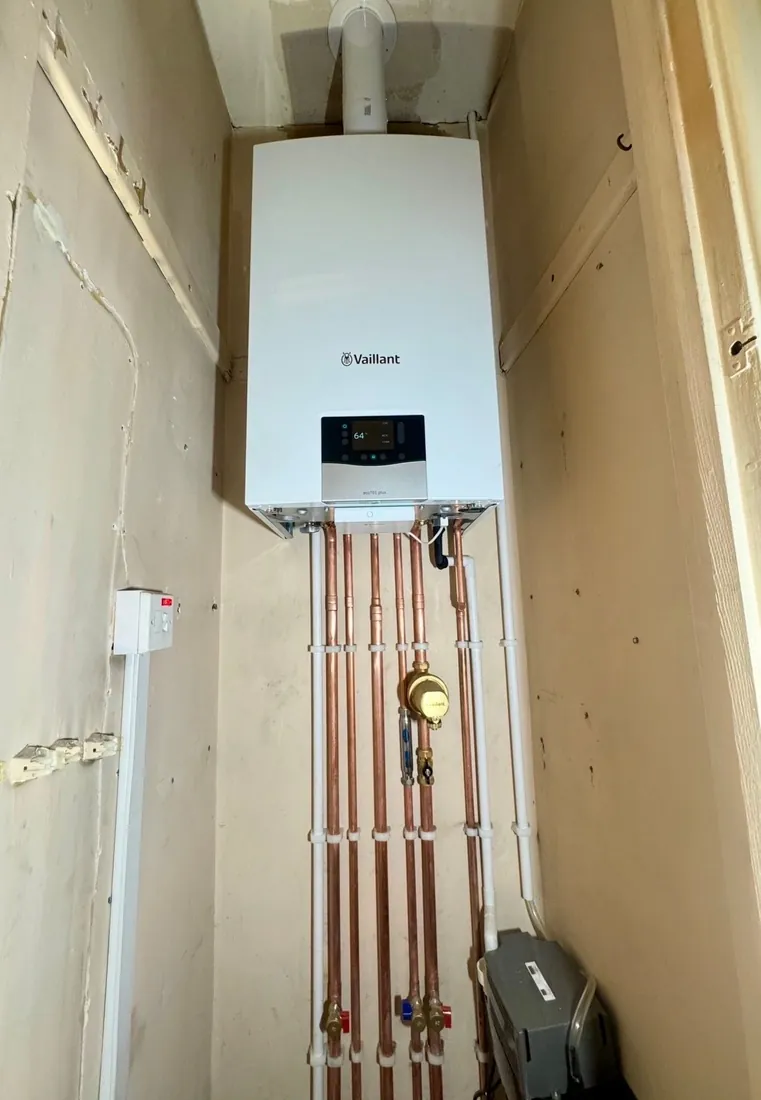
Most modern combi and system boilers are designed to shut down if something is not quite right. Built-in safety controls monitor temperature, pressure, airflow, and flame quality, then lock the boiler out if readings go outside a safe range.
That is good for safety, but it can leave you puzzled when the boiler repeatedly switches off. Understanding the likely causes helps you know what you can check yourself and what must be left to a qualified engineer.
Quick checks you can do safely
Before assuming the worst, there are a few simple checks most homeowners can carry out without tools. If at any point you smell gas, see scorch marks, or your carbon monoxide alarm is sounding, skip these and call a Gas Safe engineer straight away.
Check the system pressure: On most sealed systems, the pressure gauge on the front of the boiler should sit around 1.0 to 1.5 bar when cold. If it is below 1 bar, your boiler may shut down to protect itself.
Top up pressure if safe: If you know how to use the filling loop and your manufacturer allows it, you can gently raise the pressure into the green zone. If pressure keeps dropping, you likely have a leak that needs professional attention.
Look at the thermostat/programmer: Check that the programmer is actually calling for heat, the room thermostat is turned up, and any batteries are fresh.
Try a safe reset: Many lockouts can be cleared with a reset, but repeated resets are a warning sign. Follow your boiler manual or see your installer’s reset guide if they provide one, such as a dedicated boiler reset page.
If your boiler keeps turning off after these simple checks, there is a good chance a component, sensor, or circulation issue is to blame.
Common causes of a boiler that keeps turning off
Low system pressure and small leaks
Low water pressure is one of the most frequent reasons a boiler shuts down. Without enough water in the system, the boiler can overheat very quickly, so the safety controls turn it off.
Pressure loss is often caused by small leaks from radiator valves, pipework, or the boiler itself. If you are topping up pressure more than once every few months, it is time to have an engineer trace and fix the leak rather than just refilling.
Thermostat and programmer issues
If your room thermostat is in a draughty spot, above a radiator, or next to a sunny window, it can send confusing signals. The boiler may turn on and off in short bursts because the thermostat thinks the room is already warm.
Flat batteries in wireless thermostats and mis-set programmers are also common culprits. Check that the display is clear, the time and schedules are correct, and replace batteries once a year or when the unit starts to fade.
Pump overrun and circulation problems
After the boiler stops firing, the internal pump should continue running for a short time to move residual heat around the system. This is called pump overrun. If it is not working properly, hot water can be trapped in the boiler and cause it to overheat and shut down.
Sticking pumps, airlocks, and blocked valves can all restrict circulation. You might notice some radiators staying cold or noisy pipework alongside frequent boiler cut-outs.
Condensate pipe blockages
Condensing boilers produce acidic condensate that drains away via a small plastic pipe. If this pipe becomes blocked or freezes in very cold weather, the boiler’s safety controls will typically lock the boiler out.
Signs include gurgling sounds, visible water dripping from the boiler casing, or a fault code relating to condensate. While some homeowners gently thaw frozen external pipes with warm (not boiling) water, any persistent issue should be checked by an engineer.
Overheating from sludge and restricted circulation
Over time, rust, limescale, and debris can build up inside radiators and pipes, forming sludge. This restricts the flow of water, causing hot spots and making the boiler work harder.
When water cannot circulate freely, the boiler’s temperature can rise too quickly and trigger an overheat shutdown. Cold spots on radiators, noisy kettling sounds, and dirty water when you bleed a radiator are classic signs of sludge.
Flue and airflow problems
Your boiler needs a clear path to bring in fresh air and safely expel combustion gases through the flue. If the flue is obstructed or damaged, or the boiler is starved of air, it will often shut down for safety.
Do not attempt to dismantle or inspect the flue yourself, especially on wall-hung or loft-mounted runs. Any flue or combustion air problem is strictly a job for a Gas Safe registered engineer.
Sensor and PCB faults
Modern boilers rely on multiple sensors, including temperature probes, pressure sensors, flame detection, and flow switches. If any of these fail or read incorrectly, the boiler may cycle on and off or refuse to light at all.
Sometimes the printed circuit board (PCB) that controls the boiler is at fault. Diagnosing this properly requires specialist test equipment and training, so it is not something to attempt yourself.
Stop and call an engineer if you notice these signs
Some symptoms mean you should stop trying to reset the boiler and get professional help. Continuing to run a faulty boiler can be unsafe and may cause more expensive damage.
Repeated lockouts or needing to reset the boiler more than once
Visible leaks, dripping pipework, or a pressure gauge that keeps falling
Unusual banging, popping, or roaring noises from the boiler or flue
Any fault code relating to flue, fan, gas, or flame detection
A carbon monoxide alarm sounding or signs of soot or scorching
Switch the boiler off, ventilate the area if safe to do so, and contact a Gas Safe engineer as soon as possible.
Reducing the chances of your boiler cutting out
Regular maintenance goes a long way towards preventing intermittent shutdowns. An annual boiler service allows an engineer to check safety controls, clean key components, and spot developing problems early.
Looking after your system water quality is just as important. A clean system with the correct level of inhibitor helps protect against sludge, corrosion, and limescale, all of which can lead to overheating and breakdowns.
If your system is already heavily sludged, a professional power flush or alternative cleaning method may be recommended. This can restore circulation, improve radiator performance, and reduce strain on the boiler.
Need help in Bath, Bristol, The Mendips or Weston-super-Mare?
If your boiler keeps turning off and you are in Bath, Bristol, The Mendips or Weston-super-Mare, it is best to have it checked by a local expert. A proper diagnosis will save you time, stress, and money in the long run.
SNT Plumbing and Heating can help with fault-finding, boiler repairs, and annual servicing to keep your system running smoothly. To book a visit or talk through an issue with your boiler, call 07775504887 and speak to the team at SNT Plumbing and Heating .